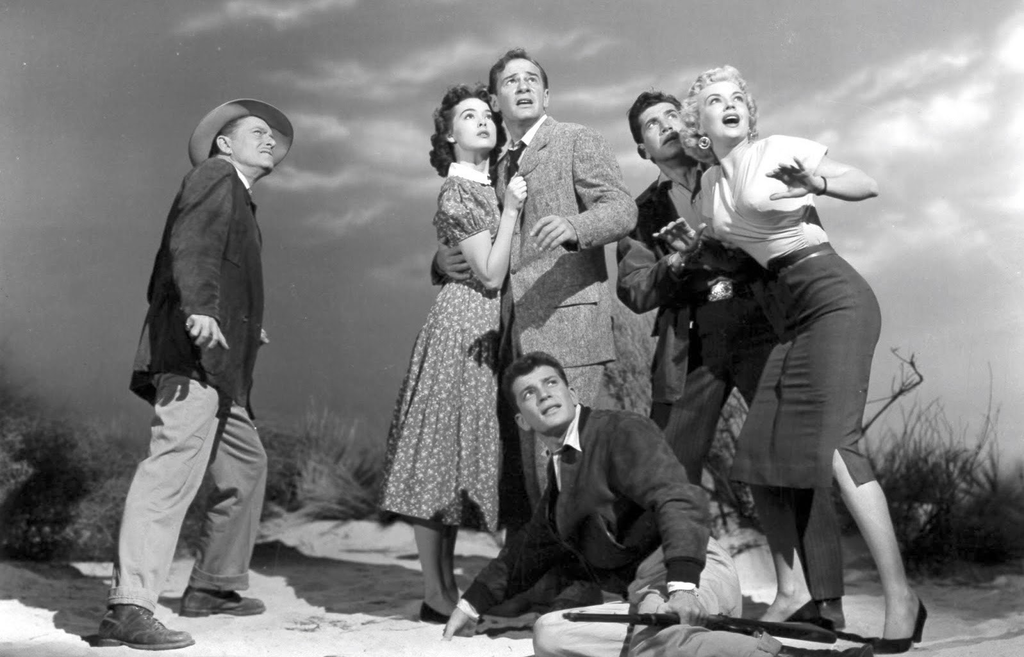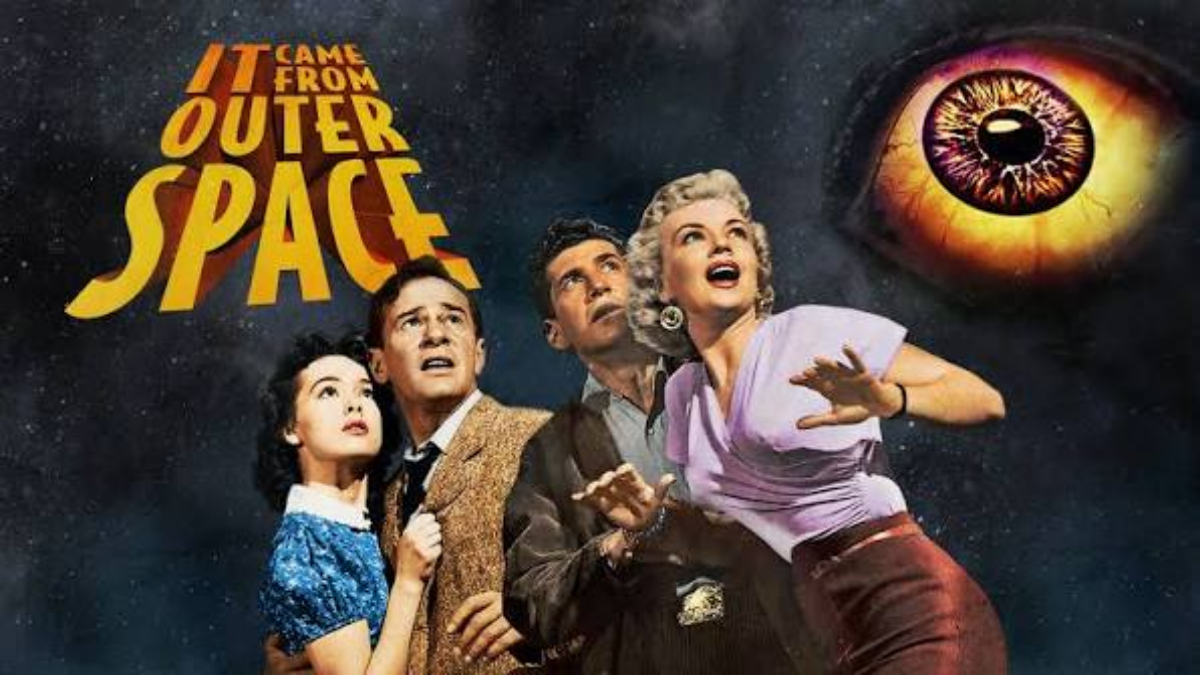
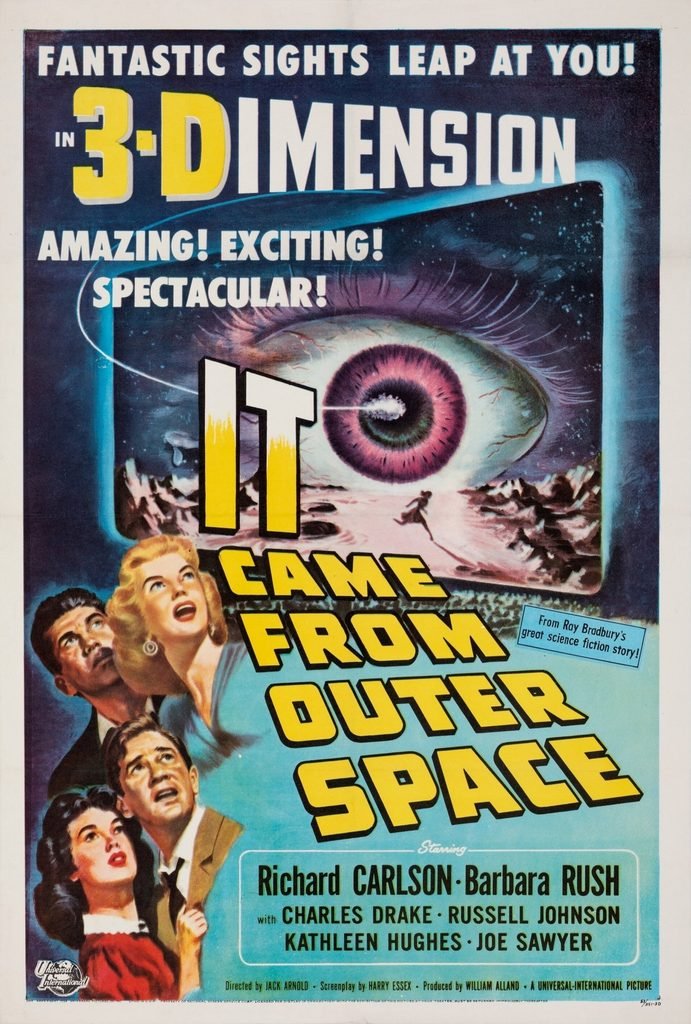
It Came from Outer Space (1953): The 1950s was a decade of cinematic paranoia for American cinema, yet most atomic-age monster features relied heavily on straightforward creature-feature terror. Comes in Universal Pictures’ It Came from Outer Space (1953), a film that completely elevated the genre (for it’s time). Directed by Jack Arnold and based on a rich treatment by legendary sci-fi author Ray Bradbury, the movie swapped mindless alien aggression for a nuanced meditation on fear, empathy, and the unknown. Today, looking back at this 3D milestone reveals just how brilliantly it subverted the tropes of its contemporaries.
Unpacking the Mystery: Plot, Production, and Iconic Elements
At its core, the It Came from Outer Space 1953 plot follows amateur astronomer and writer John Putnam (played by Richard Carlson) alongside his fiancée Ellen Fields (Barbara Rush). While stargazing in the stark Arizona desert—famously filmed around locations like the Mojave Desert and local California backlots—they witness a massive, fiery spaceship crash into the earth. Before a sudden landslide completely seals the crater, John catches a fleeting glimpse of a bizarre, organic alien lifeform.
Naturally, when John rushes to inform the local authorities, he is branded a local crackpot by Sheriff Matt Warren. Viewers curious about the supporting characters often ask who played Pete in It Came from Outer Space, and that role belongs to actor Dave Willock, who plays the helicopter or transport pilot Pete Davis swept up in the mystery. As townsfolk… including Pete, start mysteriously disappearing and returning as eerily emotionless alien duplicates, tension peaks. Yet, true to Bradbury’s empathetic storytelling, the stranded extraterrestrials are not malevolent conquerors; they are simply trying to repair their damaged ship and leave peacefully, using human duplicates only out of defensive survival.
For those eager to experience the promotional vibe of the era, tracking down the original It Came from Outer Space 1953 trailer showcases how Universal capitalized on stereoscopic 3D thrills, shouting warnings to audiences about things leaping right off the screen.
Major Tom’s Thoughts on It Came from Outer Space (1953)
These 1950s science-fiction films continue to reveal more complexity than their reputation as simple B-movie horrors might suggest. I remembered It Came from Outer Space as a fairly conventional story about aliens invading Earth when I first watched it nearly a decade ago. Revisiting it, however, made it clear that the film takes a considerably different approach. Rather than presenting extraterrestrials as hostile invaders intent on destroying humanity, it builds its story around misunderstanding, suspicion, and the fear of the unknown. Also a lovely title card
The film begins effectively with astronomer John Putnam and Ellen Fields witnessing what initially appears to be a meteor crashing into the Arizona desert. They soon discover that the object was actually a spacecraft. From there, the central mystery develops through John’s attempts to convince the local authorities that something unusual has occurred. This portion of the film works particularly well because it places the emphasis on uncertainty rather than immediate spectacle. John’s inability to make others believe his account creates much of the early tension.
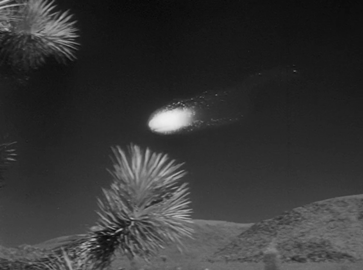
As the story progresses, the aliens begin taking the forms of people from the surrounding community. However, the film gradually reveals that they have no intention of conquering Earth. Instead, they have become stranded and are attempting to repair their damaged spacecraft. This shift gives the story a more sympathetic perspective on its extraterrestrial characters. At the same time, the humans react to the aliens with fear because they cannot understand their intentions.
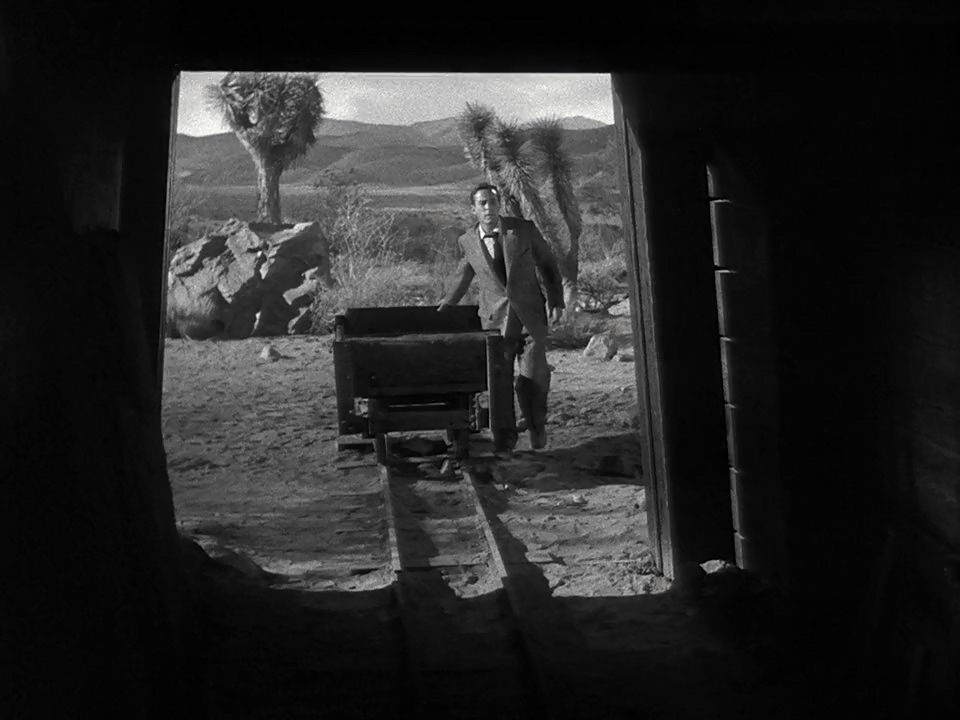
Consequently, the film presents an interesting conflict in which both sides respond to something unfamiliar with suspicion. The extraterrestrials are trying to survive and return home, while the humans interpret their presence as a potential threat. In this respect, the film reflects the atmosphere of McCarthy-era paranoia, where the fear of hidden enemies could become as dangerous as the supposed threat itself. Rather than portraying humanity as an unquestionable victim, the film repeatedly suggests that human suspicion can create its own dangers.
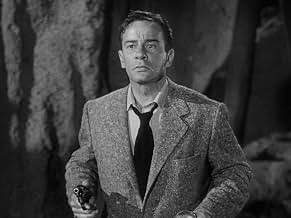
The atmosphere also contributes significantly to the film’s effectiveness. The desert locations, particularly during the nighttime sequences, give the story an eerie sense of isolation. The film often avoids showing the aliens directly and instead builds tension through sounds, shadows, and brief glimpses. This restrained approach allows the mystery to remain intact for much of the runtime. The theremin-heavy musical score further strengthens the unsettling atmosphere and gives the film a distinctly period-specific science-fiction identity.
The film’s use of 3D also adds historical interest. Although the technology occasionally draws attention to itself, it remains an important part of the film’s identity as an early stereoscopic science-fiction production. Richard Carlson carries the story effectively as John Putnam, while Barbara Rush gives a strong performance as Ellen Fields, even though the character receives less development than the role could have provided.
The alien designs are unusual and contribute to the film’s distinctive visual character. More importantly, the movie maintains a steady pace throughout much of its runtime. It establishes the mystery, gradually introduces the extraterrestrials, develops the conflict between the two sides, and moves toward its resolution without unnecessary delays. However, that efficiency also becomes one of its weaknesses because the conclusion arrives sooner than expected. The film establishes several intriguing ideas but does not explore all of them as deeply as it could have.
Overall, It Came from Outer Space works best when it focuses on atmosphere, uncertainty, and the relationship between fear and misunderstanding. Its decision to make the aliens sympathetic rather than traditionally monstrous gives the film more thematic depth than many of its contemporaries. While some of its ideas and characters could have received greater development, its desert atmosphere, distinctive score, unusual extraterrestrials, and restrained approach to suspense make it an interesting example of 1950s science fiction.
Major Tom’s Rating
3.5/5
Decades after its original premiere, revisiting It Came from Outer Space 1953 proves that thoughtful science fiction always outlasts cheap jumpscares. By casting extraterrestrials not as mindless monsters, but as misunderstood voyagers trapped by human hostility, Jack Arnold and Ray Bradbury delivered a timeless story. It remains a high-water mark of 1950s cinema—reminding us that the scariest thing in the universe is often our own immediate fear of the unknown.